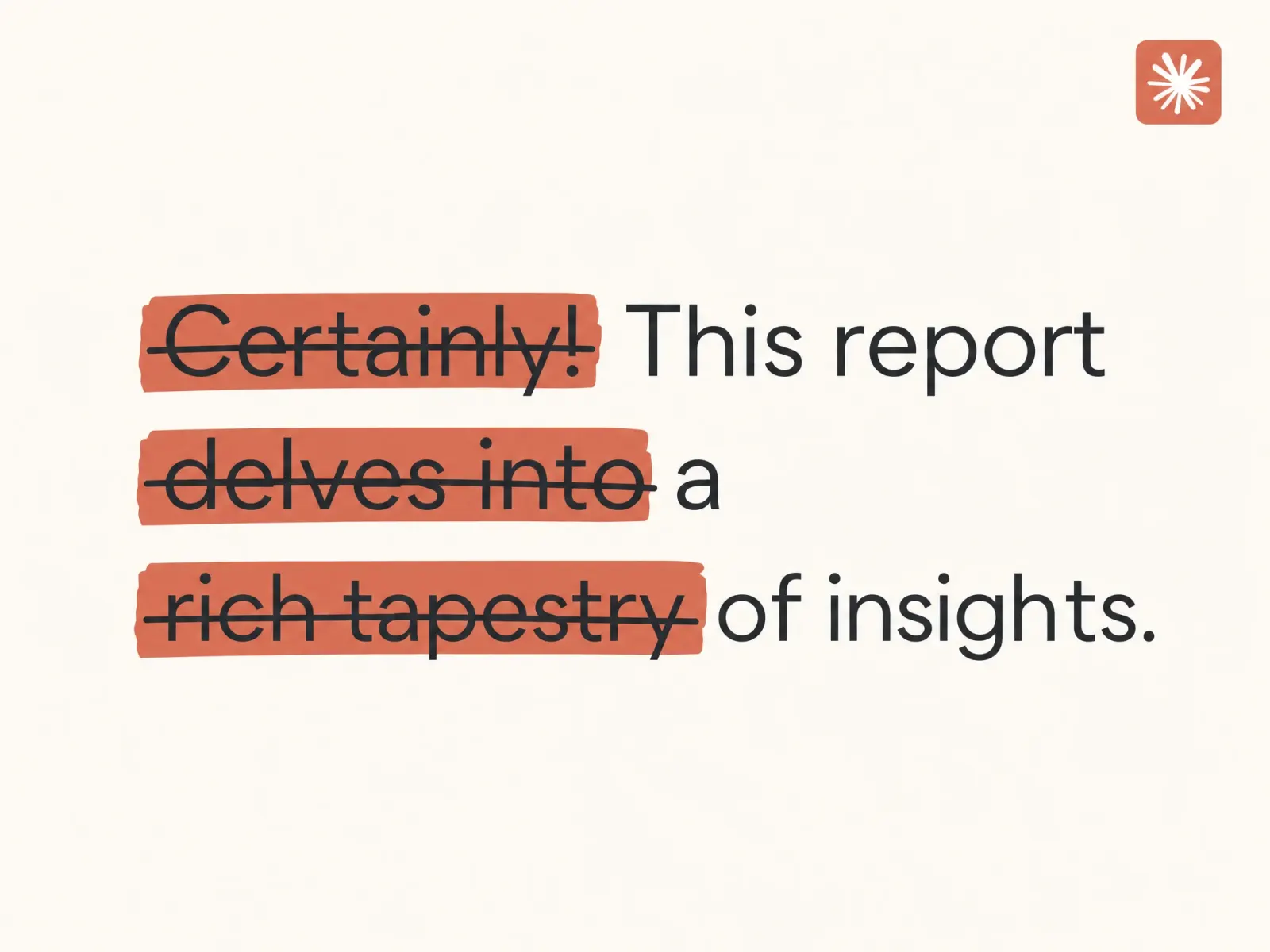
Was your text written by Claude? Since August 2, 2026, all new Claude models began to include an invisible watermark in all of their writing — paste your text into Overchat AI Claude Watermark Detector and see if your text came from Claude.
A Claude watermark is an invisible statistical pattern that detection software can easily pick up, but that is not visible to the naked eye. Also, pasted Claude text can hide zero-width characters, unusual Unicode spaces, smart punctuation, and leftover HTML attributes that can give it away. With Overchat AI Claude watermark detector, you can instantly find out if your copy came from Claude. Here's how:
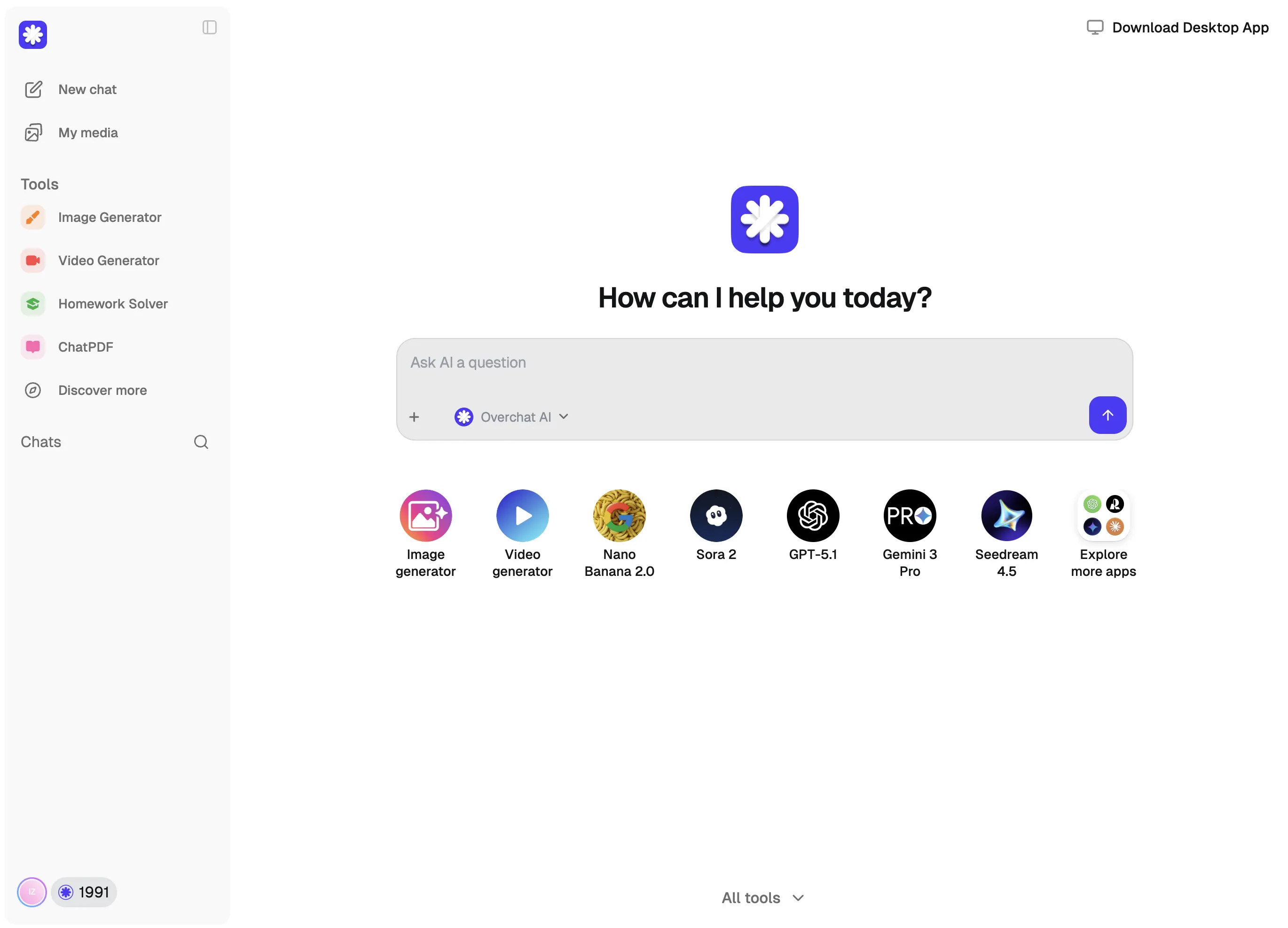
Paste any text you suspect was written by Claude into Overchat AI.
The scan counts hidden Unicode characters, identifies AI-style punctuation, and detects HTML attributes copied from the Claude interface.
You will receive a verdict and a detailed breakdown of each finding, along with a confidence score indicating whether it is a dead giveaway or a likely clue.
USE CASES
If you used Claude to write something and don't want anyone to know, run the text through the detector before sending it to clients or submitting it to school.
Paste the text you received from the freelancer to see if they used Claude to complete your gig.
Zero-width spaces, invisible joiners, and non-breaking spaces are all things that Claude adds to the text that you can's see with the naked eye — but AI detectors can.
Overchat AI's Claude watermark detector also highlights stylistic cues that can give away Claude writing, such as the overuse of dashes and triplets.
Before they go live, check blog posts, newsletters, and product descriptions.
Have 100% confidence that anything you receive, publish, or give to clients won't be flagged as AI text, including false positives.
Join 350,000+ creators already using Overchat AI to write, edit images, and create videos with the help of the world's most powerful AI models.
Overchat AI brings you the power of the world's top AI models: GPT, Claude, Gemini, Mistral, and more.
Since August 2, 2026, new Claude models have applied a statistical watermark to generated text by subtly influencing token selection during generation. Anthropic introduced the system in response to Article 50 of the EU AI Act and applies it globally across claude.ai, the Claude API, and Claude Code. The watermark is not visible to readers, but its statistical signature can be detected in the text and remains intact when the text is copied and pasted.
A Claude Watermark Remover scanner checks pasted text directly in your browser for hidden characters, formatting residue, and other artifacts that can be introduced when text is copied from Claude or other web applications. It identifies and counts zero-width characters, non-breaking spaces, unusual Unicode whitespace, soft or invisible characters, smart punctuation, em dashes, and detectable HTML or formatting residue, then shows each finding in a scan report. These artifacts can help explain where unusual formatting in copied text came from, but they should not be confused with Claude’s new statistical text watermark: Anthropic’s watermark is embedded at the model level during text generation and is not simply a zero-width character, special space, em dash, or HTML attribute that can be revealed by inspecting Unicode. Finding one of these artifacts therefore does not prove that text was written by Claude, and removing them does not necessarily remove Claude’s watermark. The scan is designed to expose the ordinary hidden characters and formatting traces that are actually present in the text you paste, while processing the text locally in your browser rather than uploading it for analysis.
Yes, Overchat AI's Claude Watermark Detector is free, with unlimited scans — and if a scan turns something up, the Claude Watermark Remover is free to use too.
Chinese company Baidu has quietly released a model that's just as good as DeepSeek and ChatGPT — ERNIE 4.5 delivers exceptional performance at a fraction of the cost — and most people outside China have never even heard of it.
If you're wondering: what is DeepSeek AI, the answer is quite simple. DeepSeek AI is a Chinese AI research lab that builds large language models. The company released several models in late 2024 and early 2025 that compete directly with OpenAI's GPT-4 and Anthropic's Claude, but at a fraction of the operating cost.
ChatGPT Plus costs $20 per month plus tax, while the Pro plan costs $200 per month plus tax. Understandably, not everyone is willing to pay that much for a chatbot, especially if the premium features aren’t worth it to them. This raises an obvious question: how can I use ChatGPT for free?
Available on Web, iOS, and Android. Access your AI assistant anywhere, anytime.



.svg)
